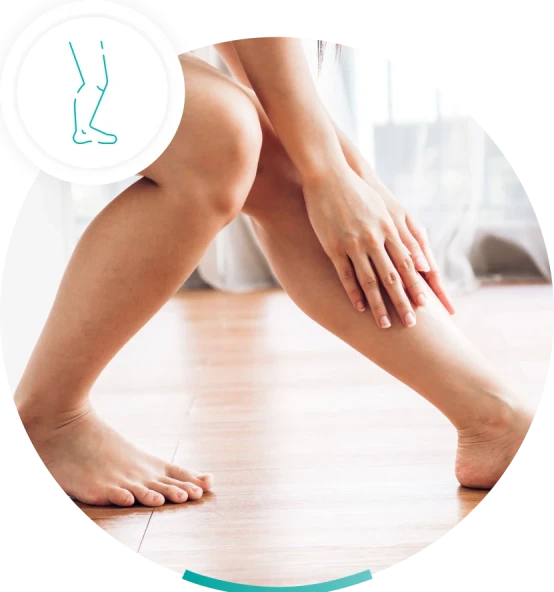
Silicone calf implants are highly sought after by people who have very thin calves, which can create that undesired gap between the legs.
Not everyone who has this characteristic is able to increase calf size through gym workouts, since muscle shape and size are strongly influenced by genetics.
Calf implant surgery aims to increase the volume of the area and provide the legs with a more harmonious contour, improving the proportion between the calves, thighs, and hips.


The procedure can be performed on men and women who are healthy adults and, preferably, within their ideal weight range. It is recommended for individuals who are unable to increase calf volume through physical exercise alone.
The implants are placed between the muscle and the muscular fascia, making their presence virtually imperceptible. Silicone calf implants are designed to mimic the natural shape, texture, and firmness of the calf muscles and have a smooth surface. The incision is made behind the knee, in the natural crease at the back of the leg. Due to its location, the scar is very discreet.

The use of compression stockings is required during the postoperative period. They help prevent venous thrombosis in the legs and pulmonary thromboembolism.

During the first month, excessive walking and climbing stairs should be avoided. Indoor physical activities should also be postponed.

Resting with the legs elevated is recommended.

Wax hair removal should be avoided during the first month due to the impact it causes. During this period, shaving with a razor is the preferred option.

The results will be almost fully noticeable by the second month after surgery. However, as with any plastic surgery procedure, the final result appears after approximately six months, which is the time the body needs to fully recover.
The duration of the surgery varies according to each case, but it generally lasts around one hour. The most commonly used anesthesia is spinal anesthesia with sedation. However, depending on the individual situation, the surgeon may opt for general anesthesia.

Olá! Preencha os campos abaixo para iniciar a conversa no WhatsApp